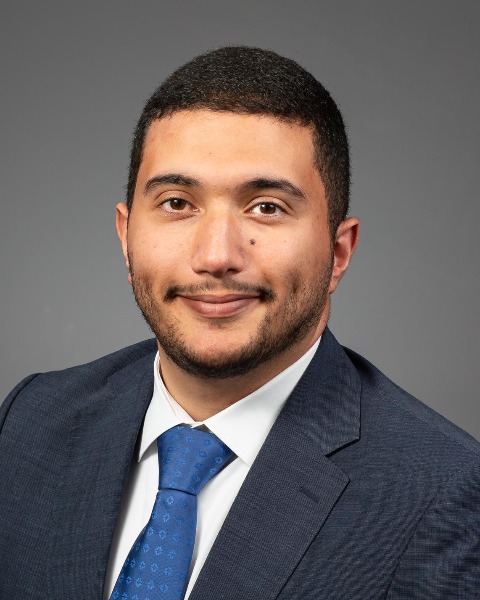
EAST CAROLINA UNIVERSITY Greenville, NC, United States
Disclosure(s):
Abdallah Fahmawi, MD: No financial relationships to disclose
Background Primary hyperparathyroidism (PHPT) is one of the most common and most treatable endocrine disorders; however, there are atypical cases and rare presentations that highlight the morbidity this disorder can cause. More severe and sustained hypercalcemia can have deleterious musculoskeletal manifestations including ligamentous injury, tendinopathies, and crystal-induced arthritides such as calcium pyrophosphate deposition disease. Ligamentous and tendon disease can lead to non-traumatic rupture, which in rare circumstances is the presenting feature of PHPT. We demonstrate here a case of non-traumatic tendon rupture in a young patient found to have PHPT with a giant parathyroid adenoma and refractory hypercalcemia. Case Description A 46-year-old male presented after hearing an audible “pop” immediately preceding a fall down a flight of stairs. He reported no pain but felt that his gait had suddenly become unsteady. Computed tomography revealed bilateral quadriceps tendon tears with diffuse chondrocalcinosis throughout the knees. Lab studies revealed corrected serum calcium of 13.4 mg/dL (normal 8.2-10.2 mg/dL) and parathyroid hormone (PTH) level of >2,500 pg/mL. Patient hypercalcemia was asymptomatic at presentation per patient. Neck ultrasound identified a 4.2 × 2.5 × 3.3 cm hypoechoic mass in the left neck consistent with parathyroid adenoma. Sestamibi scan demonstrated a left inferior parathyroid adenoma. While hospitalized, the patient’s corrected serum calcium peaked at 15.3 mg/dL; he was treated with IV fluids, calcitonin, and zolendronic acid, and he was started on cinacalcet prior to hospital discharge. Refractory hypercalcemia required additional treatment with zoledronic acid and IV fluids two weeks later. Parathyroidectomy one month later resulted in sustained normalization of PTH and calcium levels. Discussion Atraumatic tendon rupture is a rare manifestation of PHPT, with most reported cases describing an isolated, unilateral injury and less severe biochemical abnormalities than seen in our case. Our patient presented with bilateral quadriceps tendon ruptures, a pattern more commonly described in secondary or tertiary hyperparathyroidism and rarely reported in primary disease. Chronic PTH excess is felt to weaken the tendon–bone interface, leading to enthesis avulsion rather than midsubstance failure, a mechanism consistent with findings in our patient. The combination of chondrocalcinosis and bilateral tendon ruptures in our patient seems to reflect an unusually advanced and multifocal musculoskeletal disease burden, presumably driven by his giant parathyroid adenoma.
Our case emphasizes the importance of evaluation for PHPT in patients with atraumatic or bilateral tendon rupture to provide definitive treatment and prevent further musculoskeletal complications.
*Unless otherwise noted, all abstracts presented at ENDO must not be released to the press or the public until the date and time of presentation. For oral presentations, the abstracts are embargoed until the session begins. The Endocrine Society reserves the right to lift the embargo on specific abstracts that are selected for promotion prior to or during ENDO.*

.jpg)
.jpg)